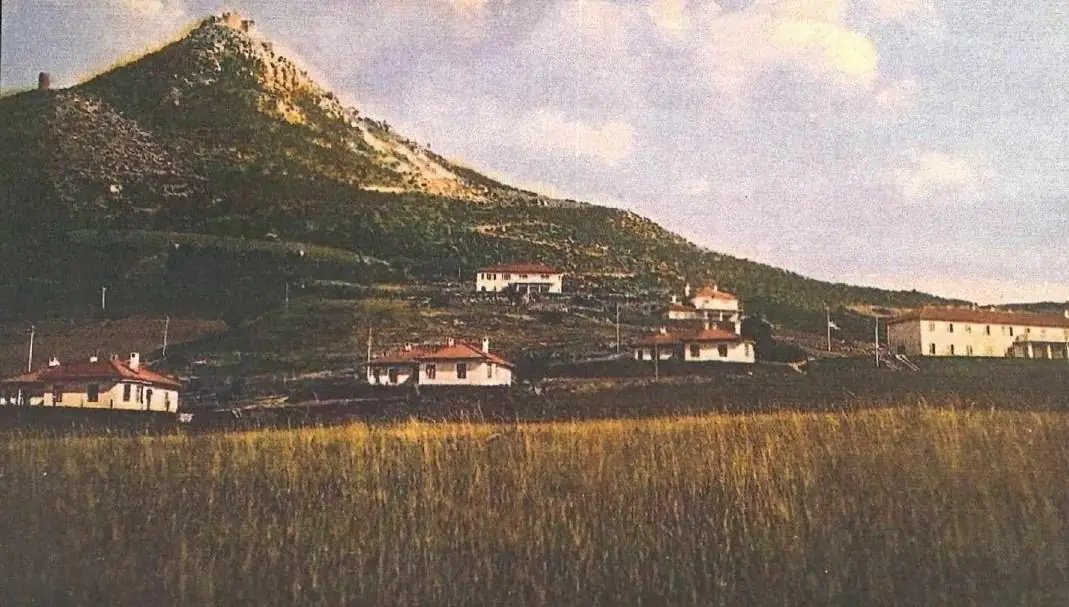
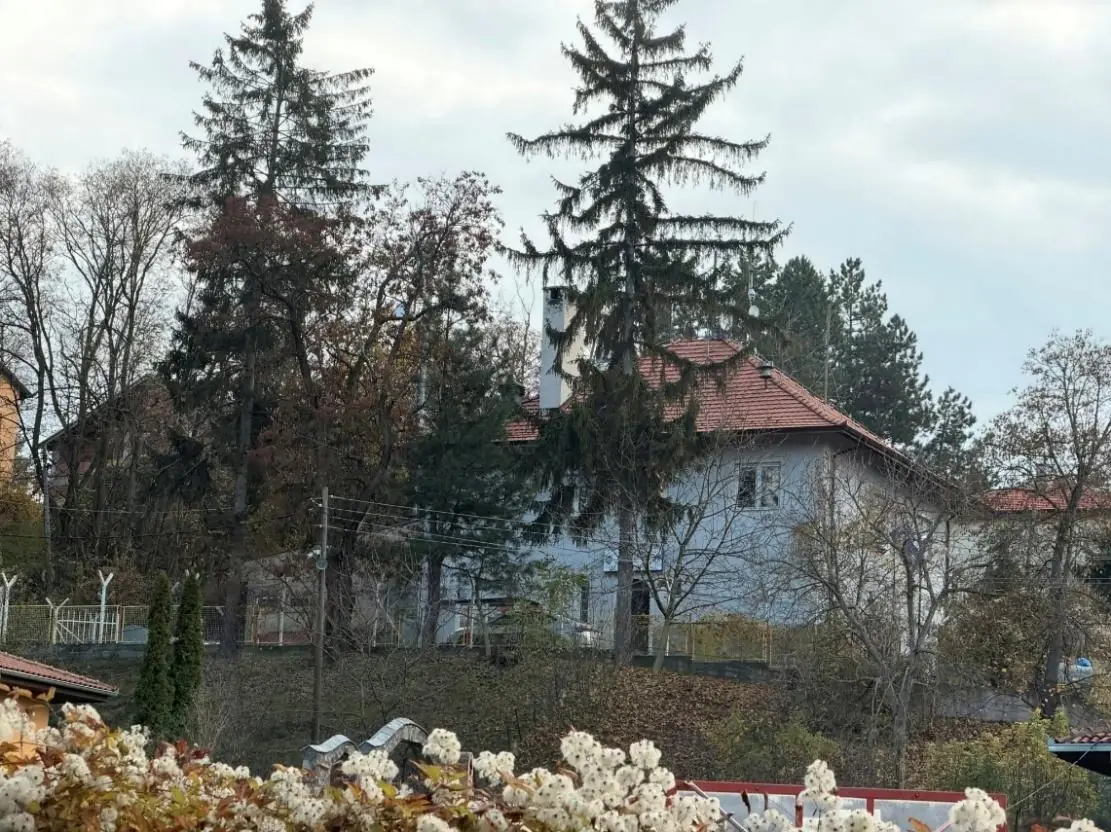
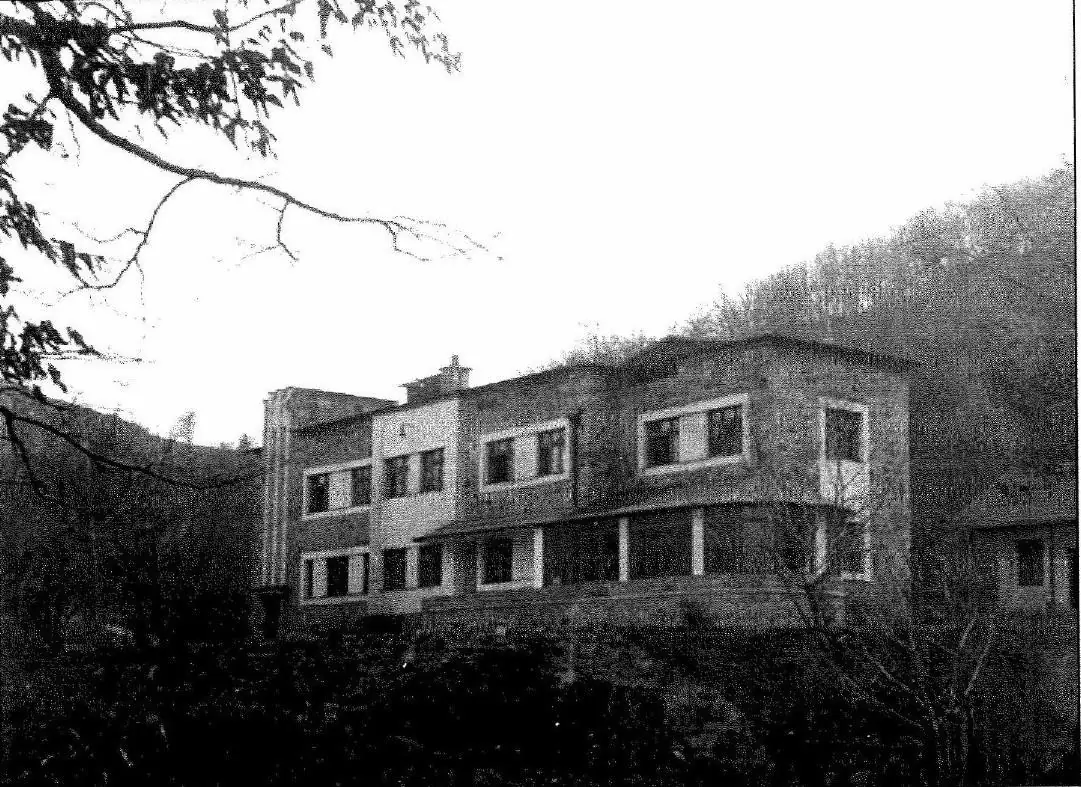
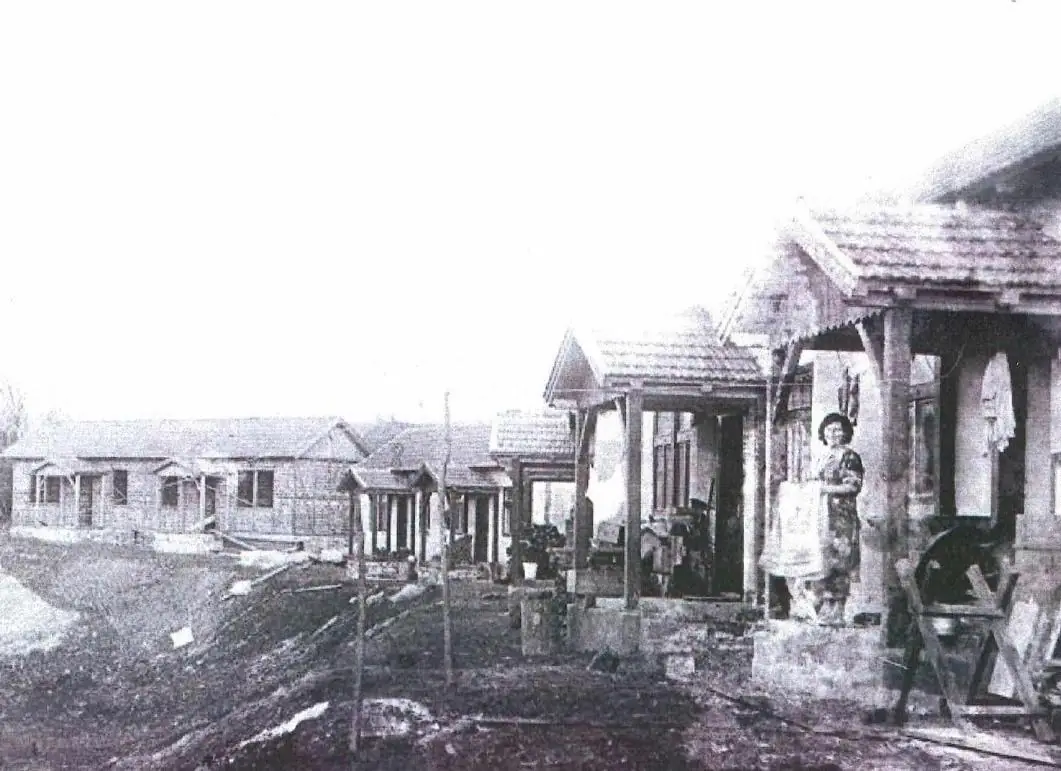
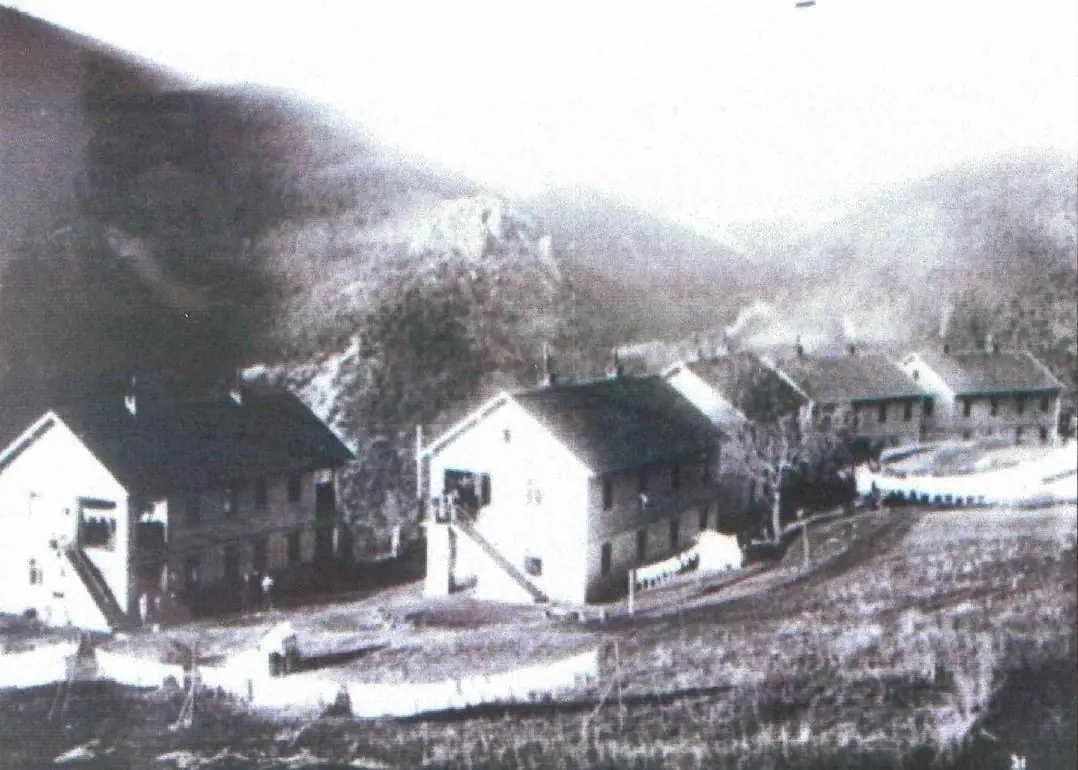
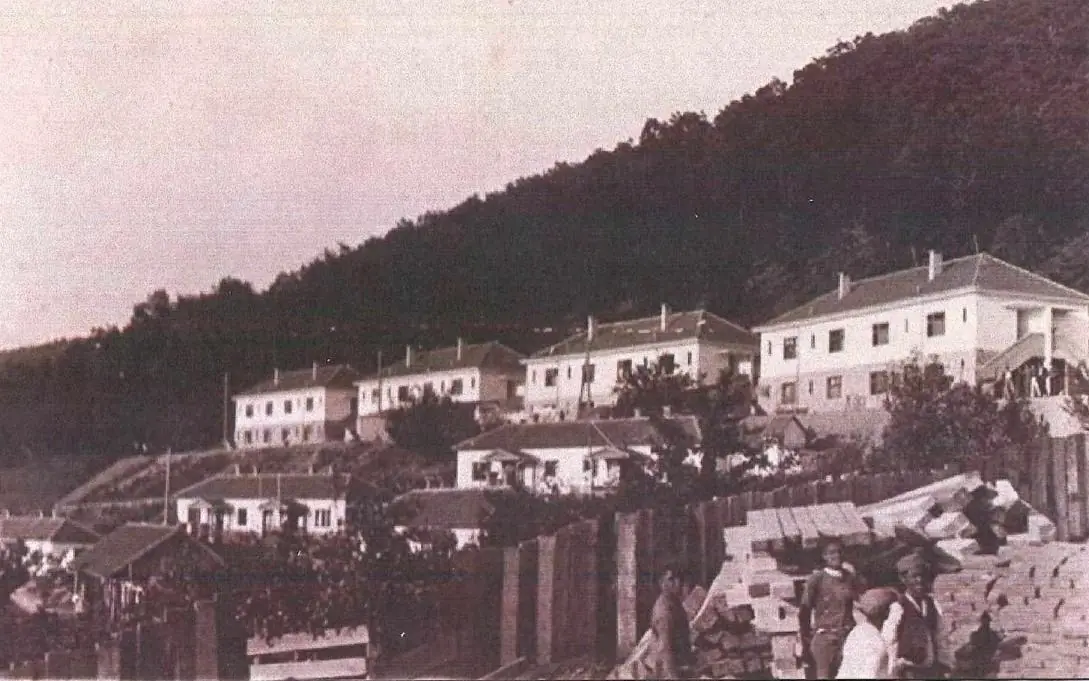
Company houses below the Zveçan hill. Hand coloured postcard.
For more than two hundred years the mines around Stan Tërg lay quiet. Then, after the First World War, British geologists walked into the Kopaonik mountains and found thousands of old workings, and beneath them one of the richest lead and zinc deposits in Europe.
011919 to 1924
The survey
A British survey after the First World War rediscovers a mining district that had been idle for two centuries.
In early 1919 a British mission arrived in the new Kingdom of Serbs, Croats and Slovenes to assess what the war had cost the country and how it could rebuild.
Alexander Wray, the member responsible for mining and industry, published his report that summer: Geology and Mineral Resources of the Kingdom of Serbs, Croats and Slovenians. No mines were active in the Kopaonik region, yet Wray visited anyway and noted many lead and zinc deposits worked in the past, carrying smaller amounts of gold, copper, bismuth and silver.
In 1924 British prospectors went further into the mountains. They found thousands of old mine sites and reported rich deposits that could be worked with relative ease. That caught the attention of Selection Trust Ltd. in London, which began negotiating for exclusive prospecting rights. The regional licence had earlier been granted to Nikola Pašić, so the company approached him to buy it for exploration.
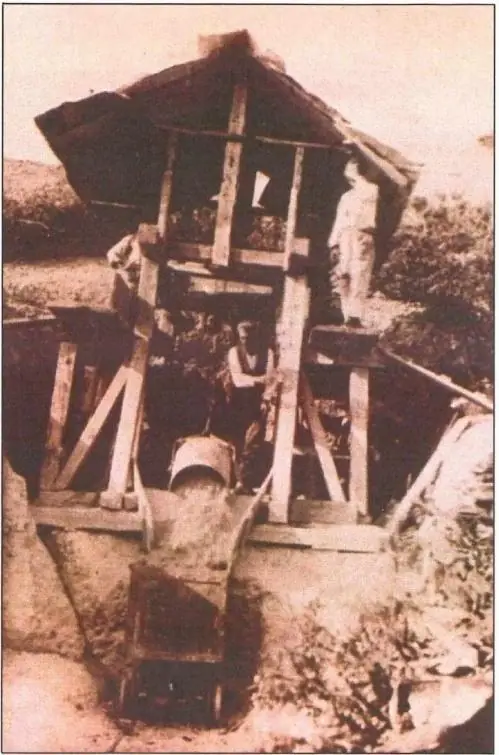
Timber headframe over an early shaft.
021925 to 1930
The discovery
Geologists confirm one of Europe’s richest lead and zinc ore bodies, 830 metres below the surface.
In 1925 a team working with Professor Tućan of Zagreb concluded that Trepça held exceptionally rich ores of silver, gold, lead, zinc and copper, with no technical obstacle to mining them.
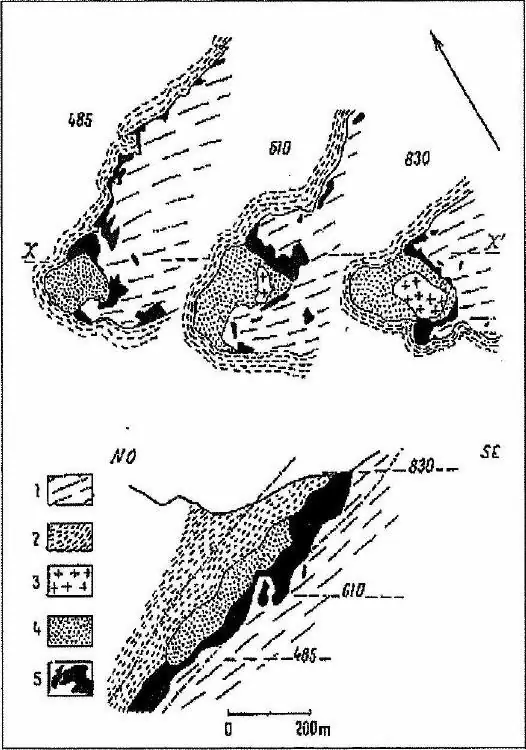
From 1926 Selection Trust, led by Sir Alfred Chester Beatty, continued the work. Between 1925 and 1932 the British engineer Harold Abbott Titcomb and the Yugoslav engineer Zboril carried out extensive exploration. In June 1930 they confirmed a rich lead and zinc ore body at the 830 metre level, and Selection Trust bought the licence. The concession covered about 529.6 km² across Trepça, Rogozna and Slatina Sokolica.
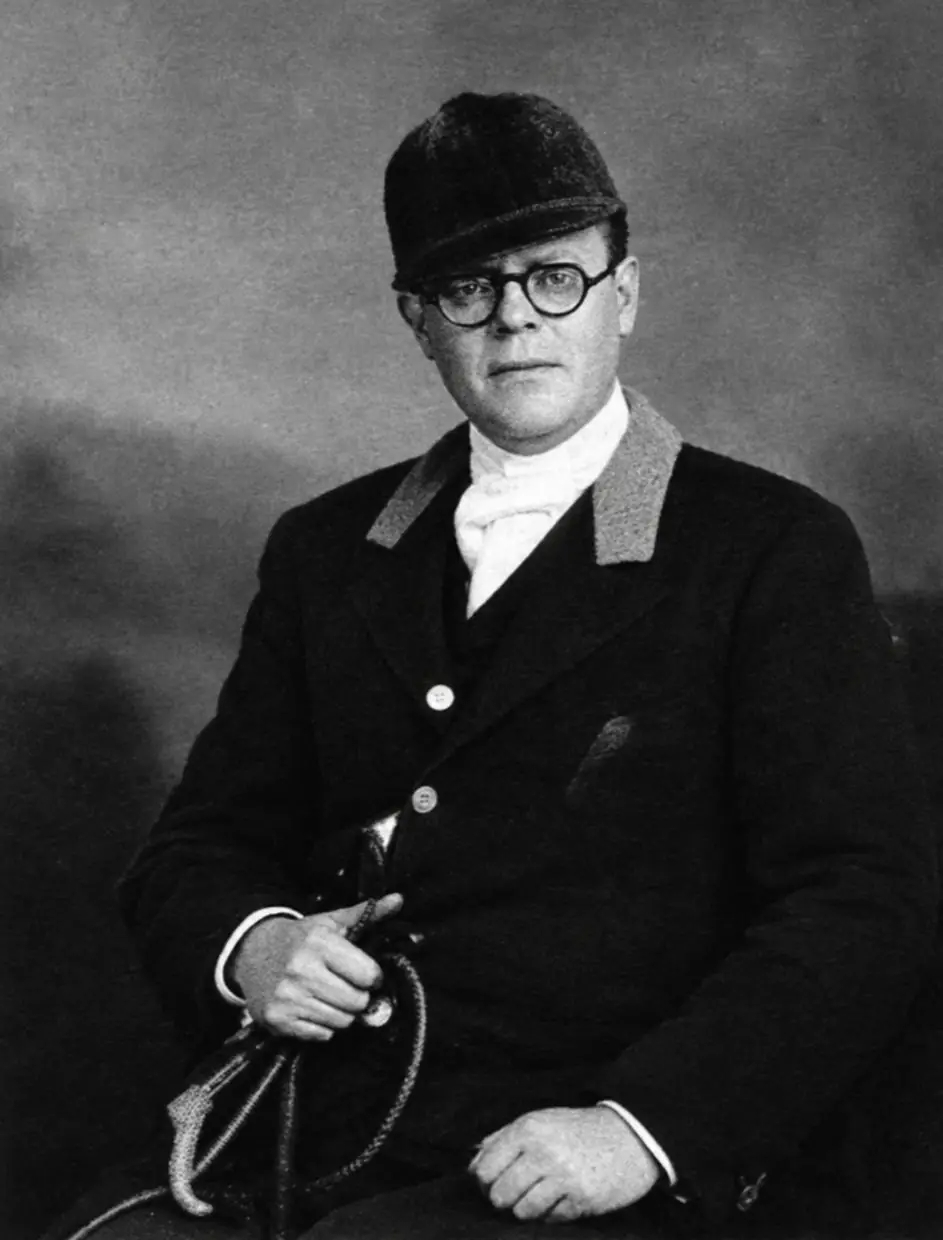
Sir Alfred Chester Beatty (1875 to 1968), founder and owner of Selection Trust Ltd.
031927 to 1930
Trepça Mines Limited
A London company is formed to mine it and soon raises £1 million.
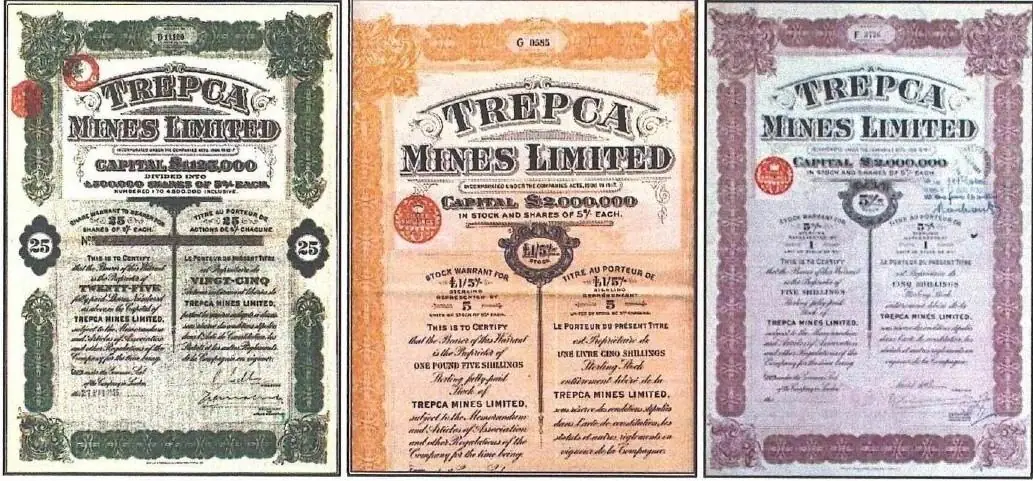
On 9 December 1927 Trepça Mines Limited was registered, with headquarters in London, general management in Zveçan and a business office in Belgrade.
It started with roughly 2,400 workers, 60 engineers and 50 administrative staff, and initial capital of nearly £300,000. As exploration grew, so did the capital, rising to £1 million to fund the mine, ore transport and processing, and housing for workers and engineers at Stan Tërg, the First Tunnel and Zveçan.
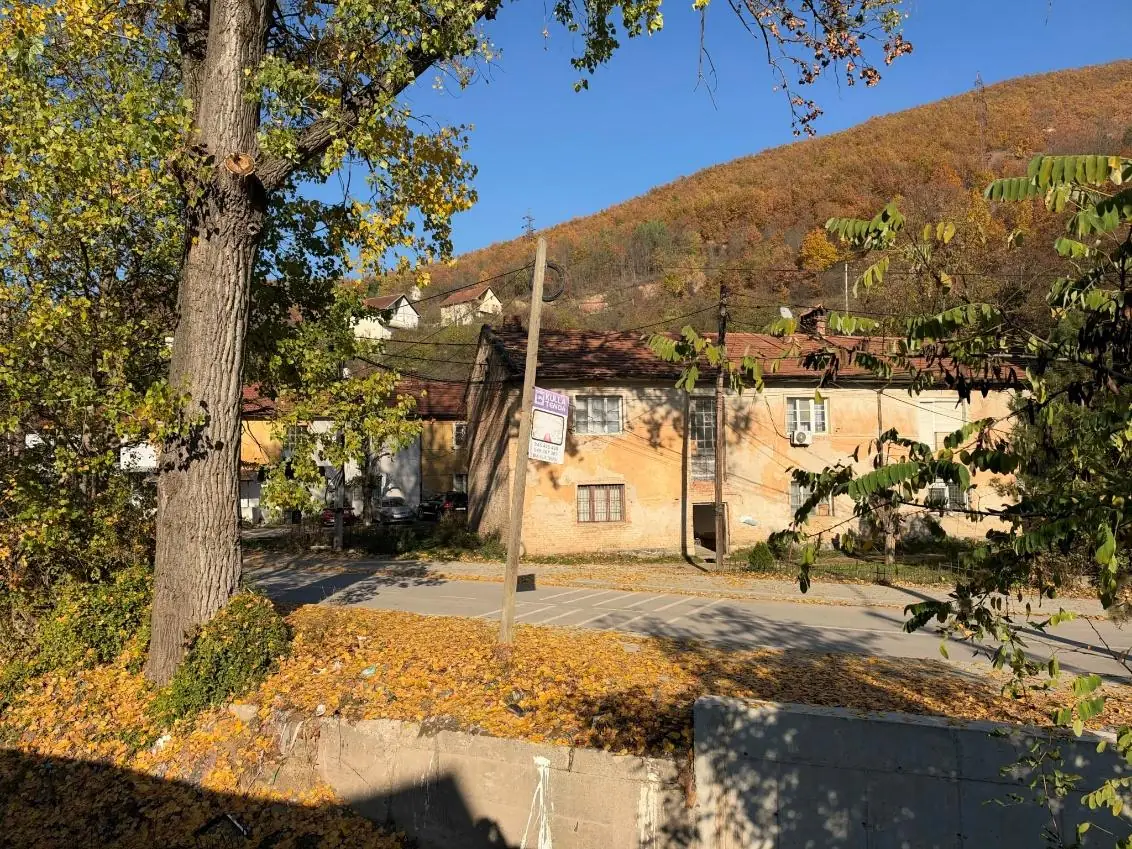
Today. The Trepça manager’s house at Zveçan, built in the 1930s. Now a police station.
Location helped. A 9 km road linked Mitrovica with Stan Tërg, and the railway opened a route to wider European markets. Yugoslav industry could not absorb the output, so most of it was exported.
Estimated ore reserves
Tonnes of ore
1928
1930
Trepça Mines Limited share certificates.Geology research scheme, Stan Tërg, levels 485, 610 and 830 m.
041927 to 1930
Opening the mine
Workers from across Europe and America drive the tunnels, build a funicular and open the mine in 1930.
Miners and specialists came from Britain, Ireland and Scotland, alongside Russian emigrants, Balkan settlers returning from North America, and builders fresh from the Kraljevo to Skopje railway.
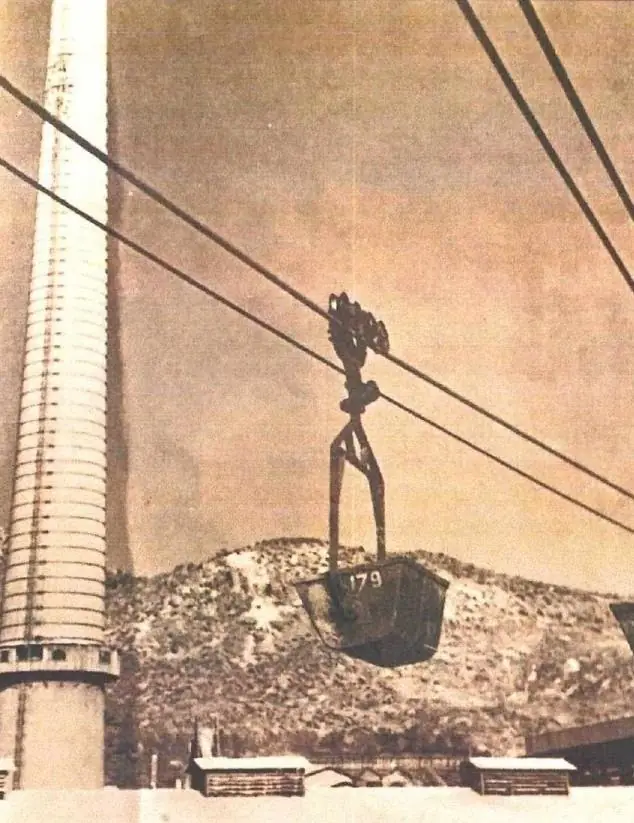
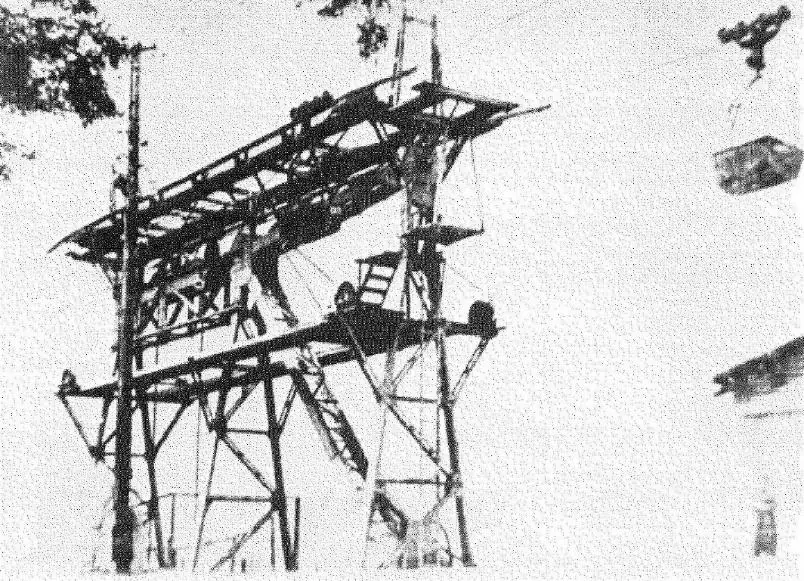
A tunnel about 2,700 m long was driven to the 610 metre level. A narrow gauge railway, a hoisting system and a rail connection for shipping ore followed. Underground, ore moved in wagons called trok; on the surface a funicular carried it to the processing plant at Zveçan, beside the Ibër and the medieval town.
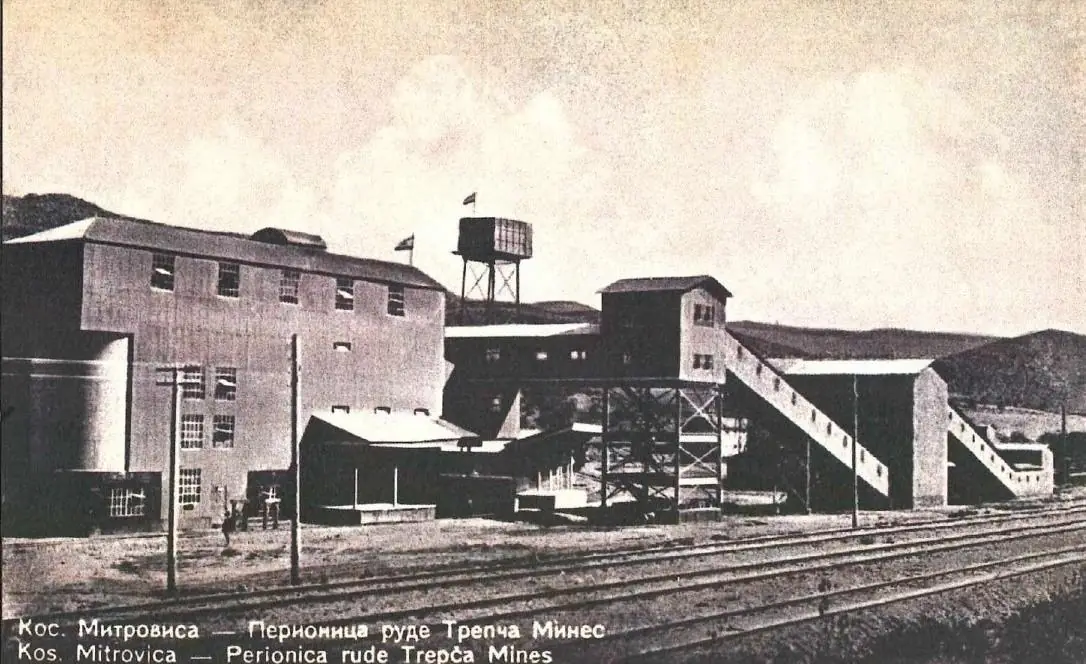
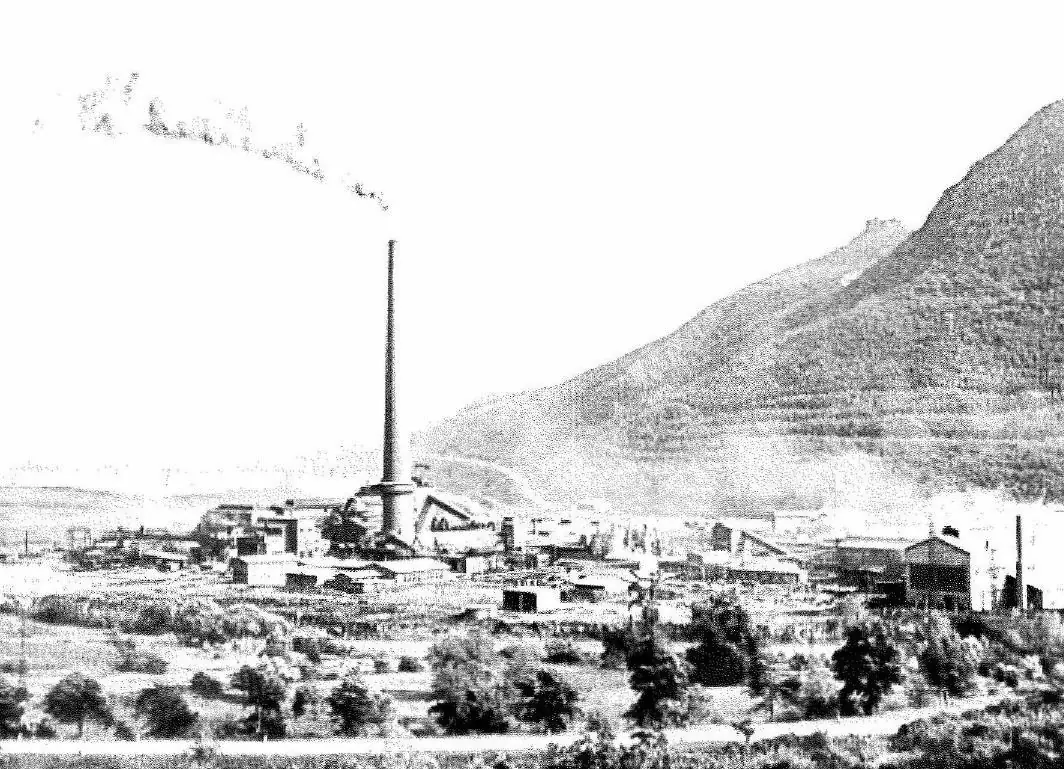
There it was crushed, ground and floated into concentrates, then thickened, filtered and loaded onto trains. A steam turbine and a 1,250 kW alternator at Zveçan powered the mine and the settlements. The mine began trial operation on 14 August 1930.
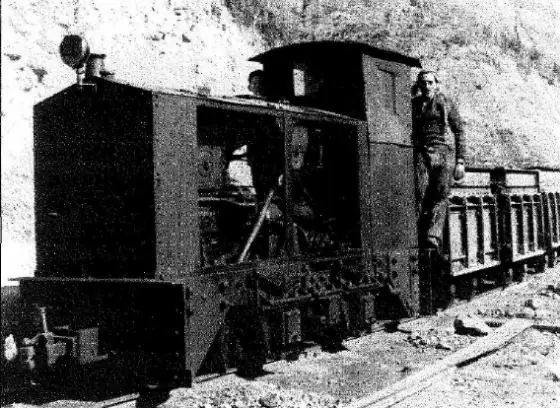
Funicular bucket carrying ore to Zveçan.Mine locomotive with ore wagons.
Ore washing plant, Mitrovica. Postcard.Today. Tuneli i Parë, the First Tunnel settlement.
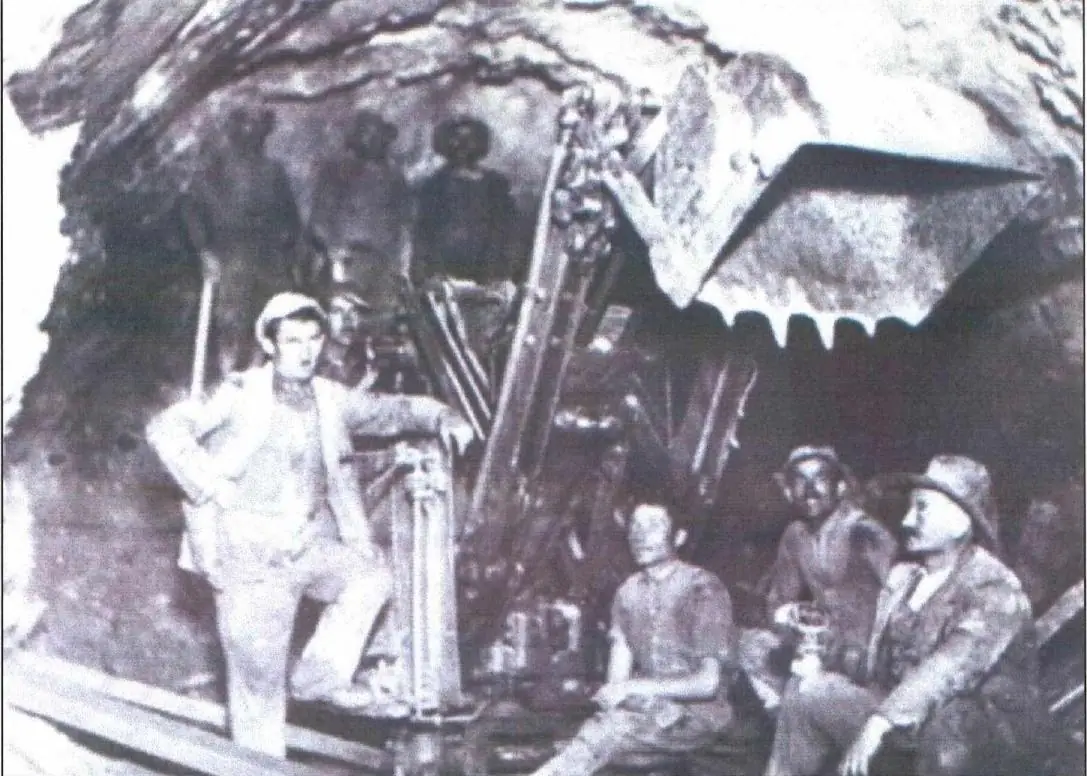
Miners underground at Stan Tërg.
051930 to 1939
The English Colony
The company builds whole towns: villas for engineers, worker housing, a school, a cinema and a hospital.
At first many workers lived in old mining tunnels, under rock overhangs or in huts by the Trepça river. By 1931 the company had built a settlement for its engineers in the Stan Tërg forest, known as the English Colony.
It had large villas above a hotel, a small swimming pool and tennis courts, and a ten room villa with a restaurant and a recreation hall called the Casino Mess. For workers, housing went up on both sides of the road at the First Tunnel, with a primary school funded by mine manager William Campbell. A House of Culture brought a cinema, a theatre hall and a library; the settlement also had a clinic, a bakery, shops, two cafés and a football field by the river.
By the end of 1935 there were 45 houses for settlers and 64 buildings for workers. By 1939 the company had housed about 250 families at Stan Tërg and the First Tunnel and 200 at Zveçan. A new hospital opened in Mitrovica in 1938, one of the most modern in the region. Many ordinary miners still lived in modest private homes nearby.
By 1941 Trepça is the first lead producer in Europe, and highly profitable.
Before the smelter existed, concentrate went abroad, mostly through Thessaloniki. The lead smelter at Zveçan opened on 21 December 1939 and poured its first lead in March 1940.
The investment paid. Total investment in Trepça was £1,053,169, or £1,860,628 including associated companies by 1940. In 1935 the owners reported profits above £200,000, with annual dividends of 10 to 30 per cent. In 1938 the company added the concessions at Kopaonik, Artana and Zletovo.
From the start of production until 1941 Trepça produced 5,972,909 tonnes of lead and zinc ore, ranking first in Europe for lead at the time.
Ore mined per year
Approximate tonnes
1930/31
1939/40
The lead smelter at Zveçan.
071941 to 1945
The Second World War
The British leave, Germany takes the mine, and miners sabotage the funicular.
On the night of 7 April 1941, as German forces invaded Yugoslavia, the British management left by train and ship. On 16 April the occupiers took over Trepça and ordered work to resume at once, sending lead to the German war industry.
On 30 July 1941 explosives destroyed three supports of the funicular between Stan Tërg and Zveçan. On 2 September 1941, thirty Trepça miners blew up the funicular tension station near the village of Rahovë. A monument on a hill above Mitrovica was later built in their memory.
Funicular tower and ore buckets.
081945 to 1980
Nationalization and the peak
Yugoslavia nationalizes Trepça, and it grows to more than 21,000 workers.
After the war, Yugoslavia’s communist government nationalized private companies. The British owners tried to recover Trepça between 1945 and 1948 and some compensation was agreed, but in 1948 it became a state company.
In the 1970s Trepça grew into the largest mining and metallurgical complex in Yugoslavia: more than 21,000 people and over forty factories, covering extraction, flotation, smelting, refining and processing of lead, zinc, silver, gold and other metals. In this period Albanian engineers first joined Trepça after graduating.
Workforce
People employed
1927
1934
1941
1970s
091981 to 1995
Strikes and dismissals
Albanian miners strike, and in 1990 almost all of them are dismissed.
Through the 1980s, Albanian protests demanded better working, educational and financial conditions and a republic for Kosovo. The source describes a forceful response from the Yugoslav authorities that reached Trepça too.
In 1989, when Serbia withdrew Kosovo’s autonomous status, Albanian miners went on strike at Stan Tërg, and protests spread to other Trepça sites and across Kosovo. After the general strike, almost all Albanian workers at Trepça and many other state companies were dismissed, and many managers, engineers and workers were arrested.
Between 1992 and 1995, under United Nations sanctions on Yugoslavia, the source states that Trepça’s resources were used for the wars in the former Yugoslav republics.
The general strike
3 September 1990
101999 to today
A divided mine
Control splits along the Ibër. Today the state owns 80 per cent and the workers 20.
After NATO and the UN Mission in Kosovo arrived in 1999, control of Trepça split along the Ibër. Albanian authorities and workers took the mines and assets to the south; Serbs kept operating those in the north.
In 2010 a British investor delegation led by Prince Michael of Kent visited Kosovo and Trepça and raised concerns about ownership, without a final outcome. Today Trepça is a joint stock company with its own management reporting to the government.
Ownership
Share of the joint stock company
80%
20%
Kosovo stateWorkers
Then
More from the archive: the workings underground, the plants along the railway and the company towns.
The colony, 1930s
The colony today
Scroll ↓
Now
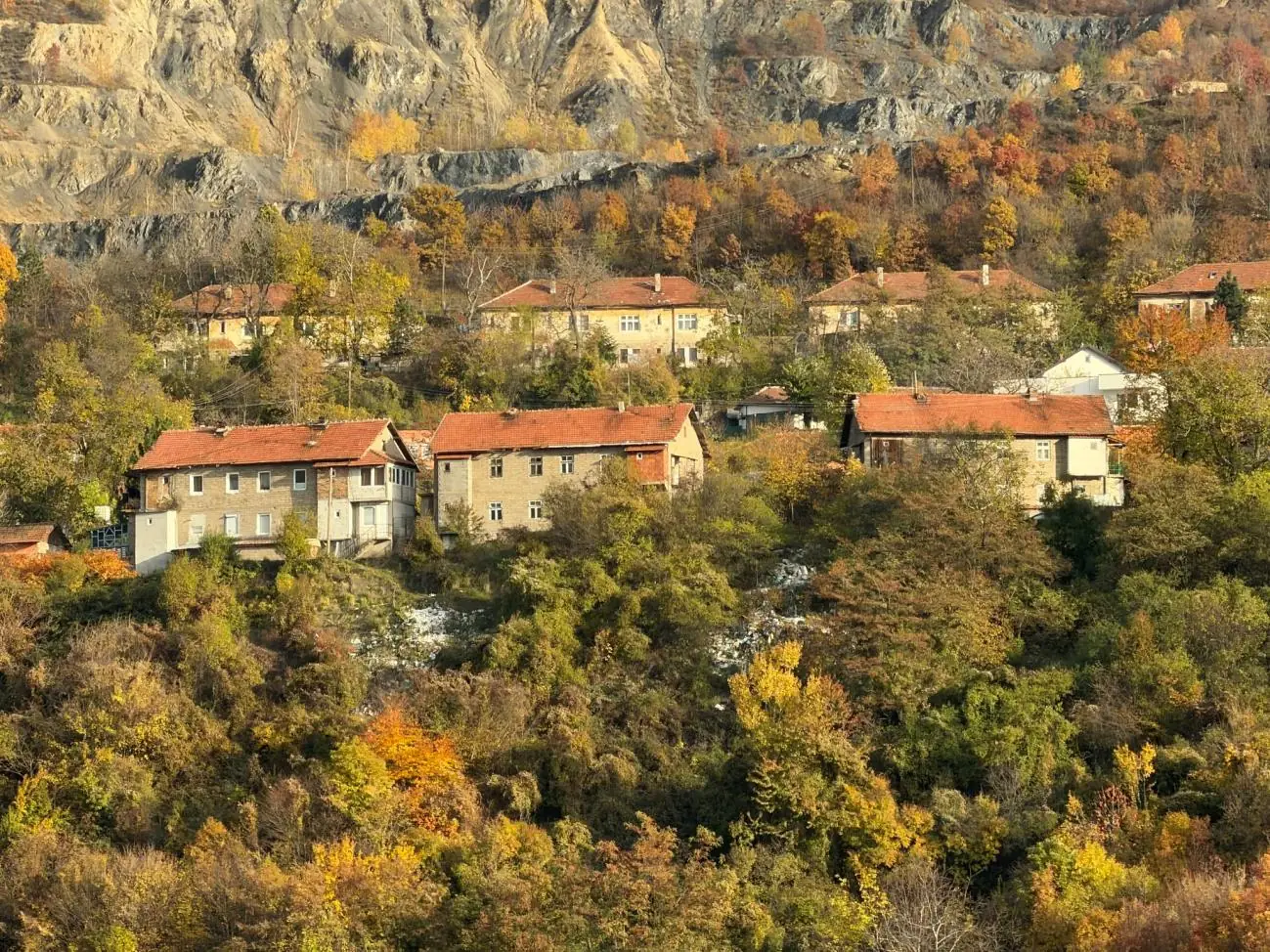
The English Colony, the First Tunnel settlement and the company buildings at Zveçan today. Some houses are still lived in. Photographed in autumn.
The people who built and worked in Trepça are central to its history. Its future depends on the mines, the plants, the workforce and new investment.
The author
Prof. asoc. Dr. Muhamedin Hetemi
Independent mining expert
About this project
Source
Adapted from the document “Trepça Mines: History facts during British exploration and exploitation”. Figures are as given in that source.
Literature
Arbër Hadri, Miftar Kurti. The case of Trepça mines (Kosovo) in Yugoslav British relations, 1944 to 1948.
Miroljub Zlatković. Trepča 1927 to 2017.
Photographs
Archive photographs and postcards come from the source document. Contemporary photographs were taken at Stan Tërg, the First Tunnel and Zveçan, in autumn.